Annette Kuhn;
Family Secrets
Acts of Memory and Imagination


Revelations
Recent work by Aiden


"Aidan is an emblematic personality in the world of Contemporary Russian art. All her activities have been a manifestation of personal and creative freedom. Her biography is an example of the self-made woman which, examined as a single life portrait, might without any contradiction combine her artistic career and gallery business, as well as make her a mentor for several generations of Russian art.
Aidan began to explore the way in which veiling, by hiding the female body and therefore transferring the objectifying gaze of the male viewer to the wearer, puts her in a position of power.
Aidan's early works deconstructed the western convention of the nude with the aim of challenging the subjective male gaze. Subsequently, she looked at these ideas in relation to the practice of veiling, demonstrating the veil's potential as a means of liberating women from the burden of objectification
by male onlookers...she further investigated how the veil confers the gaze of women, potentially putting them in a position of dominance."
Aidan's work


Photographer; Isabella Gavriilidis
KayLynn Deveney;
The Day-to-Day Life of Albert Hastings
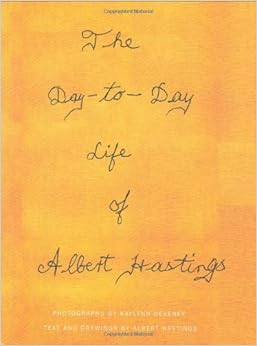


"I met Albert Hastings in 2001 when we lived in the same neighbourhood in southern Wales. Bert was renting a small flat-in what i imagine was once an elegant building, and my husband Will Reichard and I lived in a basement flat nearby.
This work is sited where Bert's autobiographical vision, based in real life experience and feeling, meets the eye of a stranger. together our visions and versions of his day-to-day experience sit side by side to create a new tale. At the end of this project Bert and I, of course, maintain our individual perspectives, but I think we are richer, too, for being informed by one another. I know I am."
Val Williams, Carol Brown and Brigitte Lardinois;
Who's Looking at The Family?
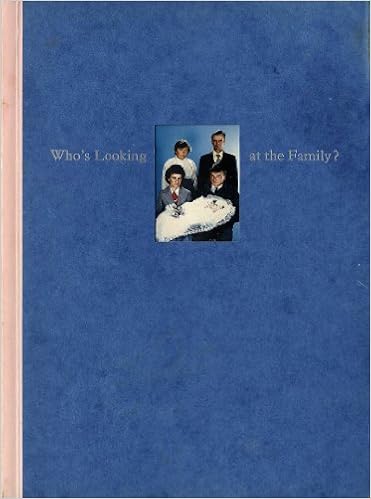

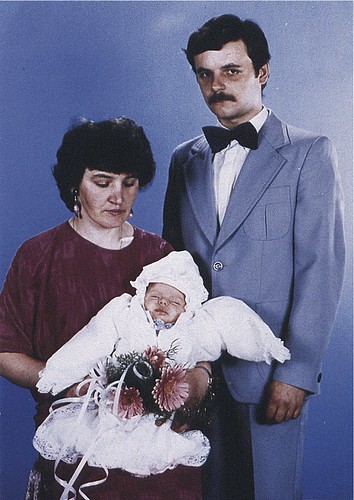

"In markets and second-hand shops throughout Europe, the effects of the dead or the dispersed are laid out for public inspection. Among those who browse are people with an interest in photography. From the hundreds of images which lie in boxes and albums, some seem especially attractive. From the clutter, faces stare out which demand rescue.
Images without provenance inhabit an eerie territory within the art world. In his search for photographs, Joachim Schmid has collected snapshots which, by their structure and content, bear remarkable resemblance to the work of 'great' photographers. He has found an Ansel Adams here and a Paul Strand there, and makes a comedy out of the random nature of curatorship.
Found photography disclaims authorship, and by selection and presentation, new 'authors' are found. Historians and archivists invest these ownerless images with their own fictions, and allow us, as audience, to develop our own.
The domestic interior has always held a particular fascination for photographers. Homes are very personal places, littered with the objects and artefacts which identify us both to ourselves and to the world outside."
Anthony and Beth Terrana;
Presumed Innocence
Photographic perspectives of children
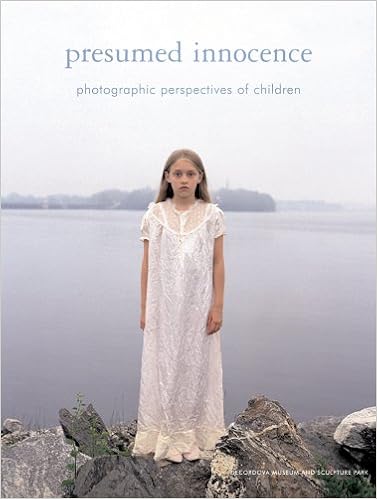


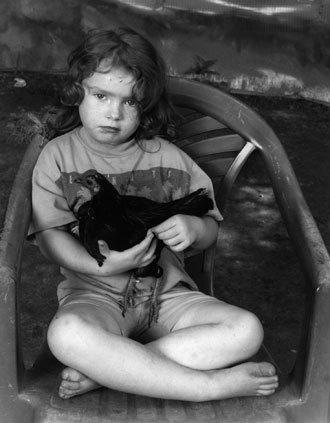
"For both amateur and professional photographers, the subject of children has been an enduring one since the invention of the medium in the early nineteenth century. From the outset, children were depicted in memorial photographs, formal studio portraits, and staged images, where they were posed as mythological figures or idealised types. Why has the subject of children been a constant one? On the personal level, there is the natural desire to document moments in time before they disappear. Parents want to capture the image of their children as they grow and change, and to record special lifetime events such as births, religious ceremonies, birthdays, graduations, and family gatherings. It follows that the majority of photographs of children are domestic family snapshots and studio portraits."
Martyn Jolly;
Faces of The Living Dead
The Belief in Spirit Photography
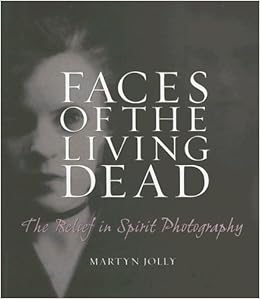


"The spirit photography craze so popular from the 1870's to the 1930's was firmly rooted in the popularity of spiritualism and psychic research. The appearance of ghostly figures, spirit writing and ectoplasm in these portraits was considered by many as nothing short of miraculous. At a time when technology and science blossomed, the impact of photography, electricity, X-rays and wireless telegraphy pushes the boundaries of human perception and experience, proving that forces, signals and messages could be invisibly sent over vast distances."
Geoffrey Batchen;
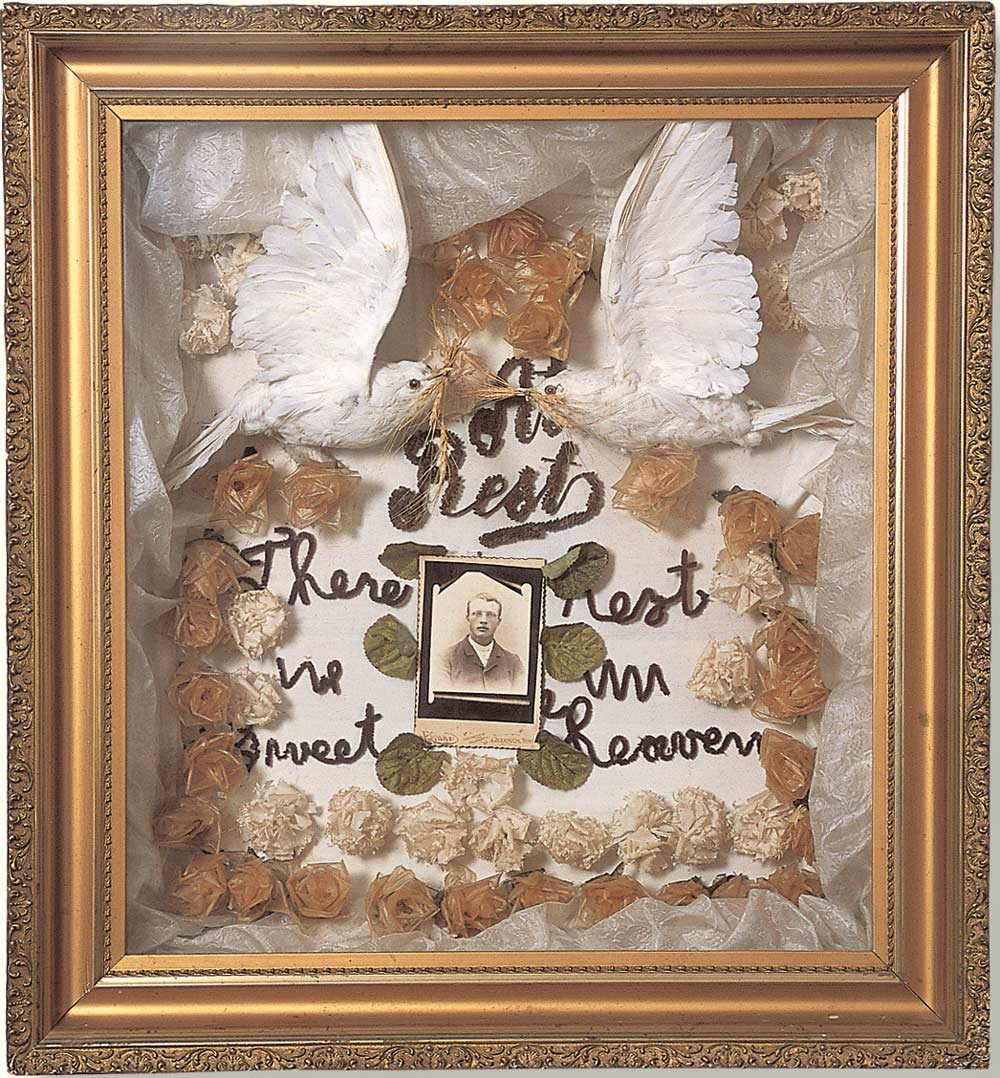
Forget Me Not
Photography & Remembrance



No comments:
Post a Comment